For our first session, we got our hands on Suke Werekata, an Ethiopian, Anaerobic Natural roasted by Opal Coffee Club, a limited-edition roasting offshoot of Camellia Roasters from Sacramento, California. The name comes from the producer village itself. The bag listed notes of lemon-lime, nectarine, and cherry, and with anaerobic processing in the mix, we were expecting something funky, fruity, and full of personality.
We brewed it two ways: pour-over and espresso. Not to find a winner, but to see what each method would bring out in a coffee this expressive.
The Pour-Over
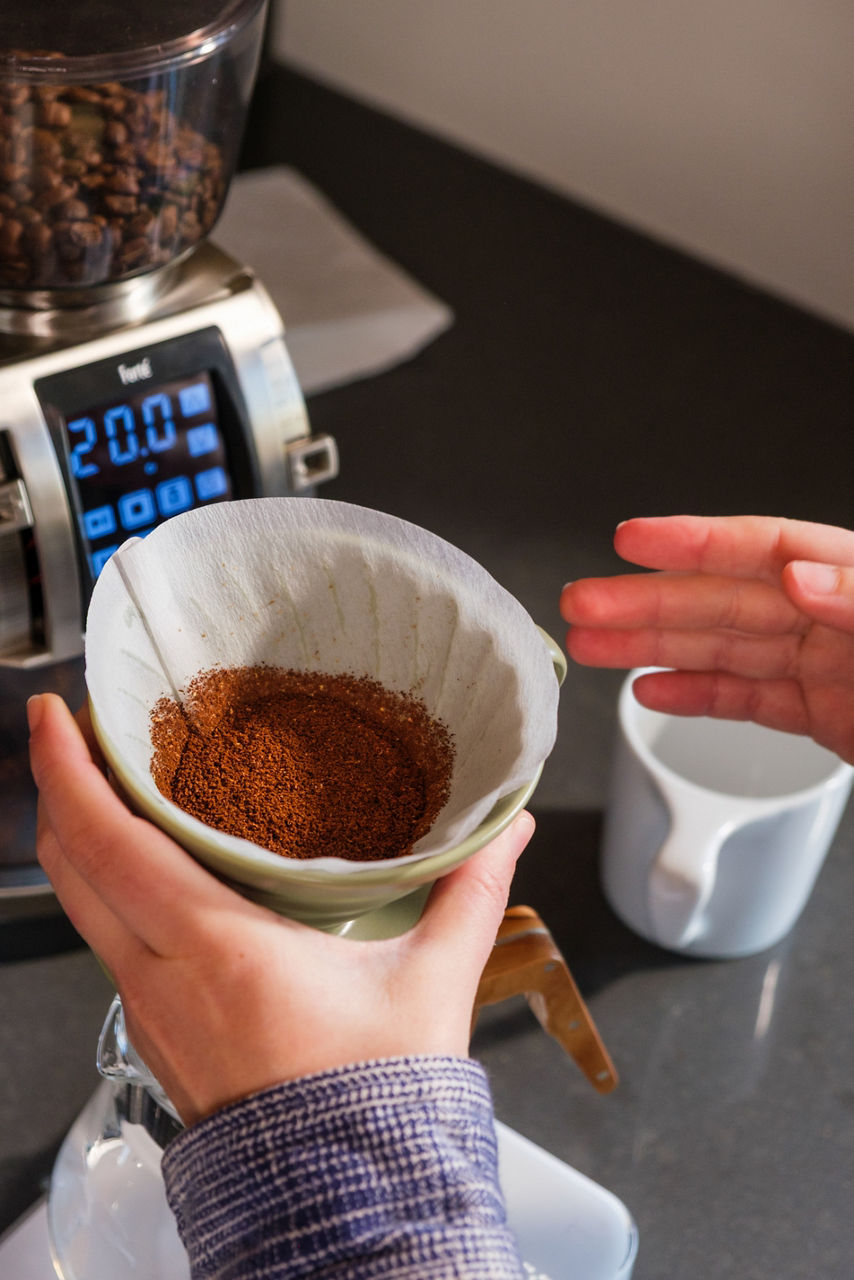
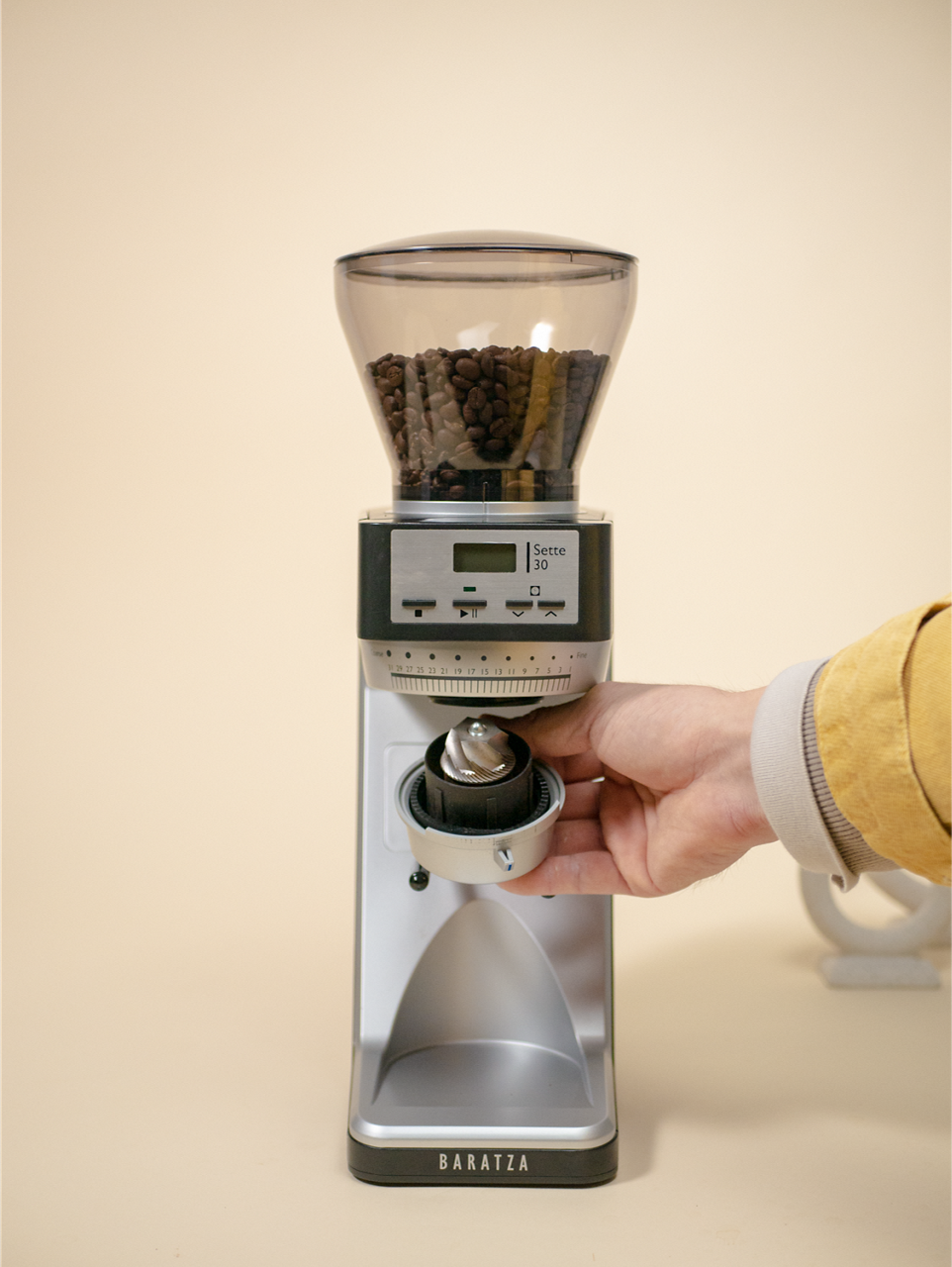
We brewed with a Hario V60 and the Baratza Forté BG, dialed in at grind setting 7Z. The target was a three-minute brew, and Ben hit just under that by keeping agitation very low throughout with no stirring and no swirling. Ryan flagged a useful tip here: with high-elevation coffees, especially with naturally processed Ethiopian ones, it helps to grind a touch coarser than you might expect and keep your pours controlled with as little agitation to the bed of coffee as possible. These coffees can cause a brew to stall, where water simply can't push through the coffee bed. A slightly coarser grind and low agitation keeps things moving.
A quick reminder: grind settings are always starting points, not universal recipes. Grinder calibration, coffee age, roast level, water, and pouring style all matter, so use the setting as a reference and adjust from there.
Nose first. Ryan picked up a boozy, heavy fruitiness right away, with a hint of the lemon-lime the bag had listed. Ben caught the same, along with a note of milk chocolate.
Then the taste. Anaerobic natural coffees can hit with real intensity, very fermented, almost kombucha-like, and this one was no different. But Ryan noted that, despite that intensity, the coffee was still well-balanced. He described it as a chocolate-covered cherry with a touch of lemon zest. Additionally, there was some boozy, stone fruit notes mixed in. As it cooled, nectarine came forward, the booziness dialed back, and a citric acidity sharpened into focus. This pattern of a cup evolving as it cools is a commonality in all coffee tasting and is crucial to pay attention to.
Both of us noticed some astringency early on that faded as the temperature dropped. Ben was on board from the first sip, but Ryan found it really opened up closer to room temperature. It's worth remembering: if a cup doesn't land right away, give it a few minutes before writing it off. A lot can change.
The Espresso
Ryan took a different approach here compared to the common 1:2 espresso ratio since he knew this coffee would bring a lot of intensity. Rather than pulling a standard 36g shot, he went for a longer, slower extraction: a 65g yield from around 22g of ground coffee. He used the Baratza Encore ESP Pro, dialed to grind setting 36.5, paired with the LELIT Mara X3. Using the machine's flow control, he held brew pressure to around 6 bars throughout, which suited the length of the extraction, after a pre-infusion of only a few seconds. The world of espresso is so much bigger than just a simple 1:2 ratio brew, and this coffee showed it.
The nose on the espresso was noticeably more fruit-forward than the pour-over for both of us. Ryan described it as brighter; Ben picked up a bit of cinnamon sugar. Even at this longer ratio, Ryan pointed out that the shot still held real textural complexity, which one might have thought would be lost at such a long ratio shot. Citrus notes came through clearly while the shot was still hot, and as it cooled, notes of blueberry syrup began to emerge.
Same pattern as before: cooling revealed something new. What stood out here was how different that shift felt compared to the pour-over. While the cooling of the pour-over brought out the citric acid, the espresso pulled that back to bring forth a berry sweetness.
Where We Landed
We were split. Ben preferred the pour-over for the funky, fermented intensity that came through right from the start. Ryan leaned toward the espresso and its brighter citrus character. Neither of us was wrong, which we believe is a key part of enjoying coffee with someone else! There are very few right and wrong answers when it comes to tasting.
Bringing It All Together
Playing around with brew methods and parameters is so central to the home brewing experience because you can control every variable, unlike in the café. Grind size, brew ratio, agitation, pressure, and brew method; adjust any of them and the cup changes completely, even if the coffee is the same. The same bag can deliver many genuinely different experiences, and they are all worth exploring.
If you want to try a similar comparison at home, start with a coffee that has something interesting going on like a natural process, a distinctive origin, or an unusual roast profile. Brew it two ways and pay close attention to how each cup changes as it cools. Explore the world of coffee!
FAQ
What is anaerobic natural coffee processing?
In anaerobic processing, coffee cherries ferment in a sealed, oxygen-free environment before the fruit is removed and the beans are dried. Natural processing on its own, where the whole cherry dries around the bean, already amplifies fruit-forward flavors. Combine the two and those flavors push further, often resulting in coffees with intense, fermented, wine-like complexity.
Why do naturally processed Ethiopian coffees sometimes stall during pour-over brewing?
High-elevation beans tend to be denser, and natural processing can contribute to finer particles during grinding. During a pour-over, this can compact into a tight bed that slows or stops water flow altogether. Grinding slightly coarser than usual and keeping agitation minimal gives the water an easier path through the grounds and keeps the brew on track.
Does letting coffee cool really change the flavor that much?
It does, and it's one of the most underrated parts of tasting. Heat suppresses certain flavor compounds and can mask acidity. As a cup cools, different notes become more perceptible, like fruit, florals, or sweetness that were harder to detect at higher temperatures. If a coffee doesn't immediately work for you, allow it to cool closer to room temperature and it may surprise you.
What is a Q-grader?
A Q Grader is a coffee professional trained and certified to evaluate coffee quality using standardized sensory methods. That includes cupping, sensory analysis, and green coffee evaluation. In practical terms, Ryan has had his palate professionally tested, which makes him a fun person to taste coffee with.
We Grind. You Brew.
 Coffee Education
 Coffee Education
 Coffee Education
 Coffee Education
 Coffee Education
 Coffee Education