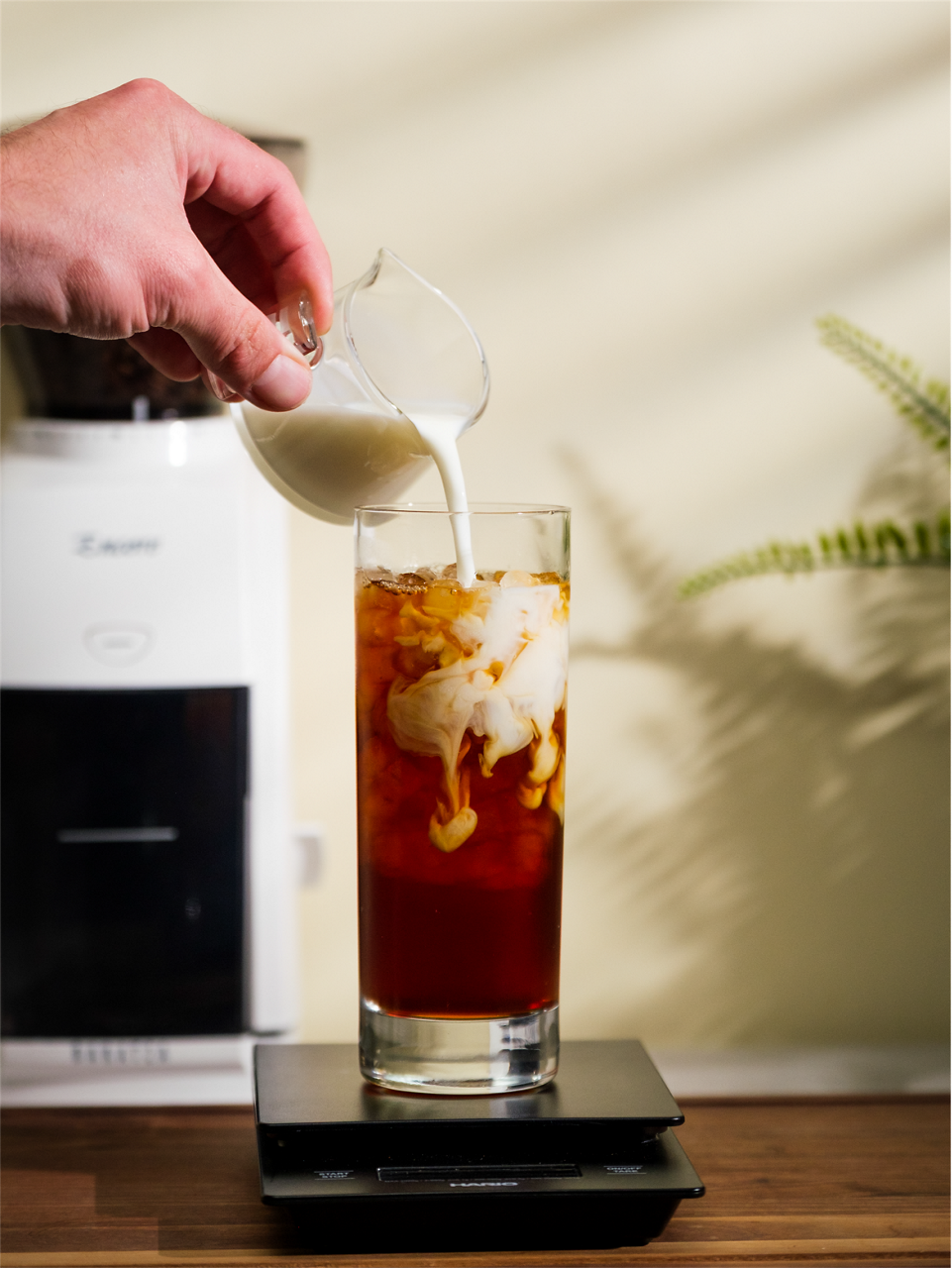
The simple difference is this: iced coffee is usually coffee brewed hot and served cold, while cold brew is coffee brewed with cool or room-temperature water over a longer period of time, typically overnight. That difference is straightforward, but the resulting flavor differences are where things get interesting.
Iced coffee is a serving style that can be applied to several different preparations of coffee, but all with the commonality that they are brewed hot, then cooled. It can be made by brewing hot coffee as one normally would, often espresso, and pouring it over ice. Think of an iced latte or an iced Americano: the espresso is usually pulled the same as for a hot drink, just added to cold milk or water with ice. Other recent examples include the Aerocano, an iced Americano that has been aerated with a steam wand; the Shakerato, a sweetened and shaken iced latte; and the ever-popular espresso tonic, an iced espresso beverage with tonic water and typically a citrus garnish. These show some of the depth of the iced coffee world; from shaken drinks to cocktail inspired beverages, the iced coffee cannot be pinned down.
This group of drinks is certainly not limited to espresso, however. It can also be made as flash cold brew, sometimes called Japanese iced coffee, where a hot pour-over is brewed directly over a measured amount of ice. That second method is especially loved in specialty coffee because it captures the lively aromatics of hot brewing while chilling the coffee immediately, which offers itself up for fun experimentation. And despite having the words “cold brew” in the name, it is an iced coffee, not true cold brew. Done well, it can taste crisp, fragrant, and bright.
Cold brew, on the other hand, is a specific brewing method. Instead of using hot water to pull flavor from the coffee quickly, it uses relatively cool water over a much longer period of time. A typical cold brew might steep for eight, 12, or even 20 hours, depending on the recipe and whether it is being made as a ready-to-drink brew or a concentrate. It can be served over ice, mixed with milk, poured through a nitro tap, or even warmed up later (try heating up your cold brew with a steam wand for a fun new black coffee drink). Cold brew is not defined by being served cold, but rather by being extracted or brewed cold as the name suggests.
The primary difference in flavor profile between iced coffee and cold brew comes down to how temperature effects extraction, research suggests. In 2024, research from UC Davis contrasts with the folk wisdom that cold brew “must” steep for 24 hours, or even for 12, and helps shine light on the unique combination that temperature and time have in coffee extraction [1]. The research shows that in full immersion brewing, where coffee is in contact with all of the brew water for the full brew, hot brews can reach equilibrium of coffee extraction, meaning the point at which concentration stops increasing, in roughly 20 to 30 minutes. So, after that period, the concentration of dissolved coffee in the liquid will not increase. For cold brew purposes, room-temperature brews reach that state in about five hours and refrigerator-temperature brew in roughly ten or more hours.
Cold brew is often described as sweeter, smoother, and lower in acid compared to other black coffee. Scientific sensory work, as reported on by the SCA, suggests cold brew can taste less bitter and less sour than hot-brewed coffee that has been chilled, and cold brew coffee is measurably less acidic than hot-brewed coffee [2]. Drinkers in the experiment rated the cold brew as lower in bitterness and sourness than the hot coffee.
The tradeoff in our experience is that cold brew does not always capture the same high, sparkling aromatics that hot brewing can. If you love the smell of a fresh pour-over and the lively pop of citrus or berry notes, flash brew may be your cold coffee best friend. Because flash cold brew uses hot water, it can pull out those delicate aromatics quickly, then lock in freshness by landing directly on ice. The result can be bright, clean, and refreshing without tasting flat.
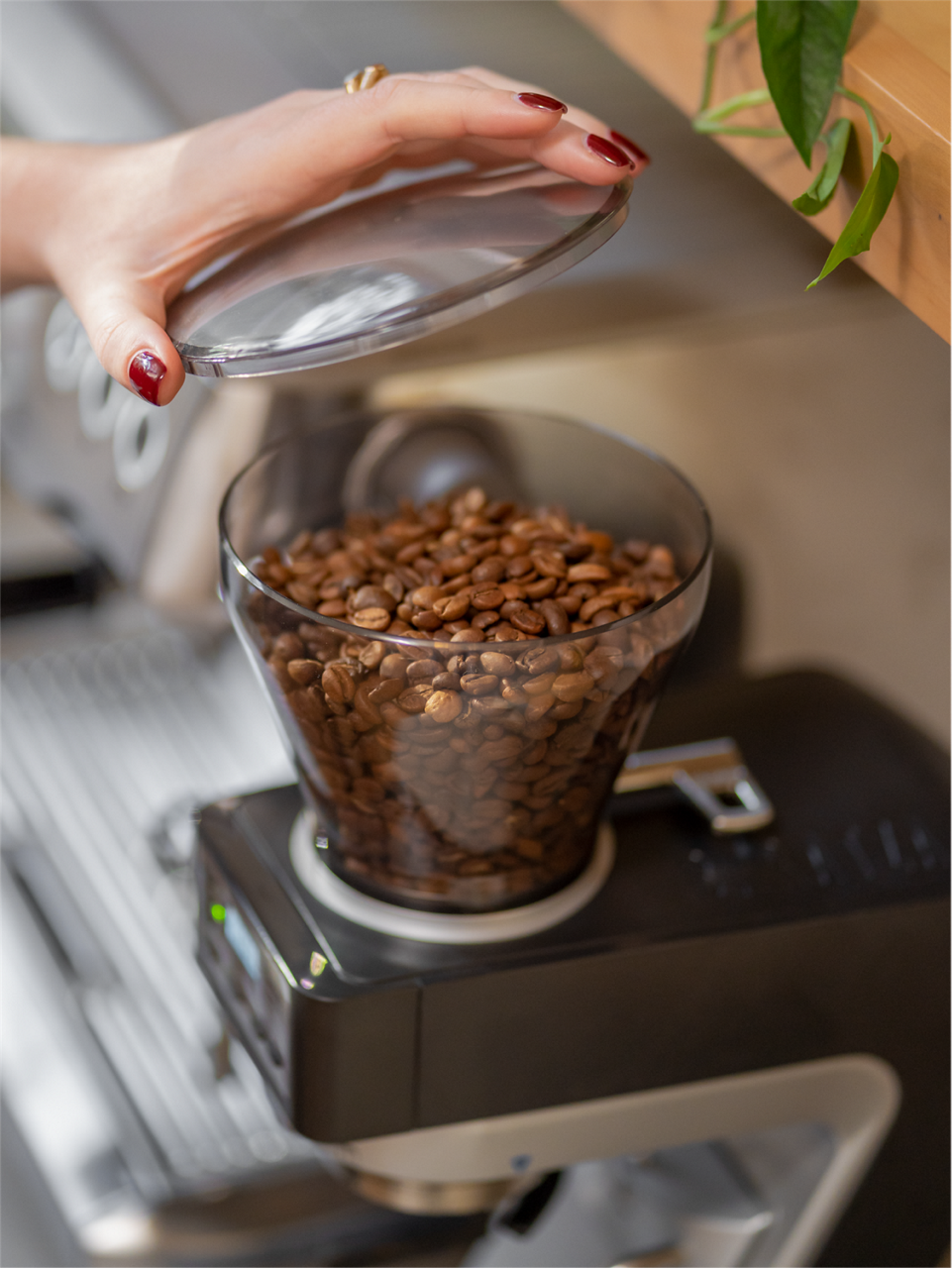
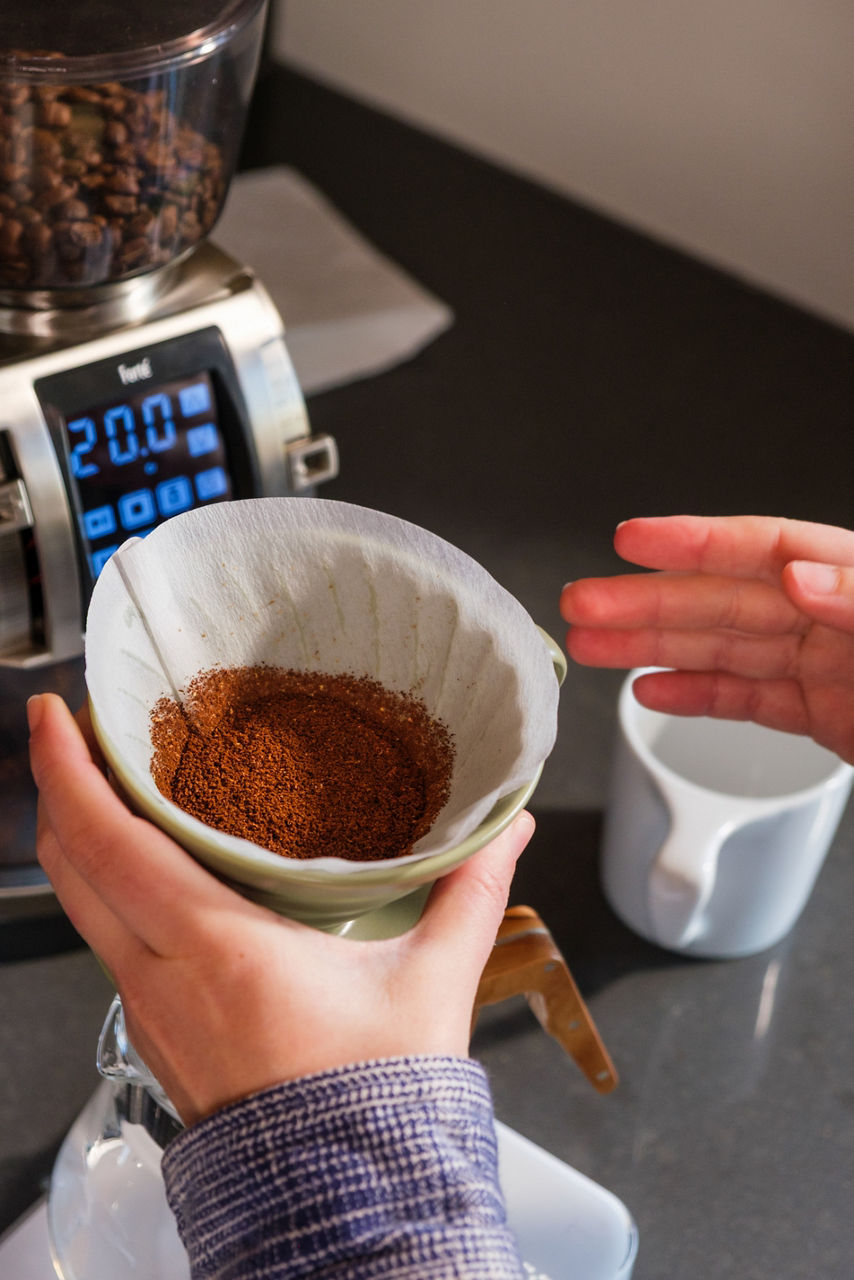
This is where grind size and recipe choice differ between iced coffee and cold brew. For flash cold brew, for example, a medium-fine grind is crucial to the recipe. For cold brew, the grind is typically moved to the coarser end of the grind range. Coarse grinds are common because the coffee will be sitting in water for a long time, steeping like tea.
Now, let’s address that question of whether or not cold brew should be a concentrate. Some cold brew is made ready to drink, while some is made as a concentrate to be diluted before drinking. For example, our Encore ESP Pro cold brew guide uses a ratio of nearly 1:10 [4].
Looking beyond the U.S. makes cold coffee even more fun. Japanese iced coffee, Vietnamese cà phê sữa đá, and Greek frappé all highlight different global approaches to cold coffee preparation.
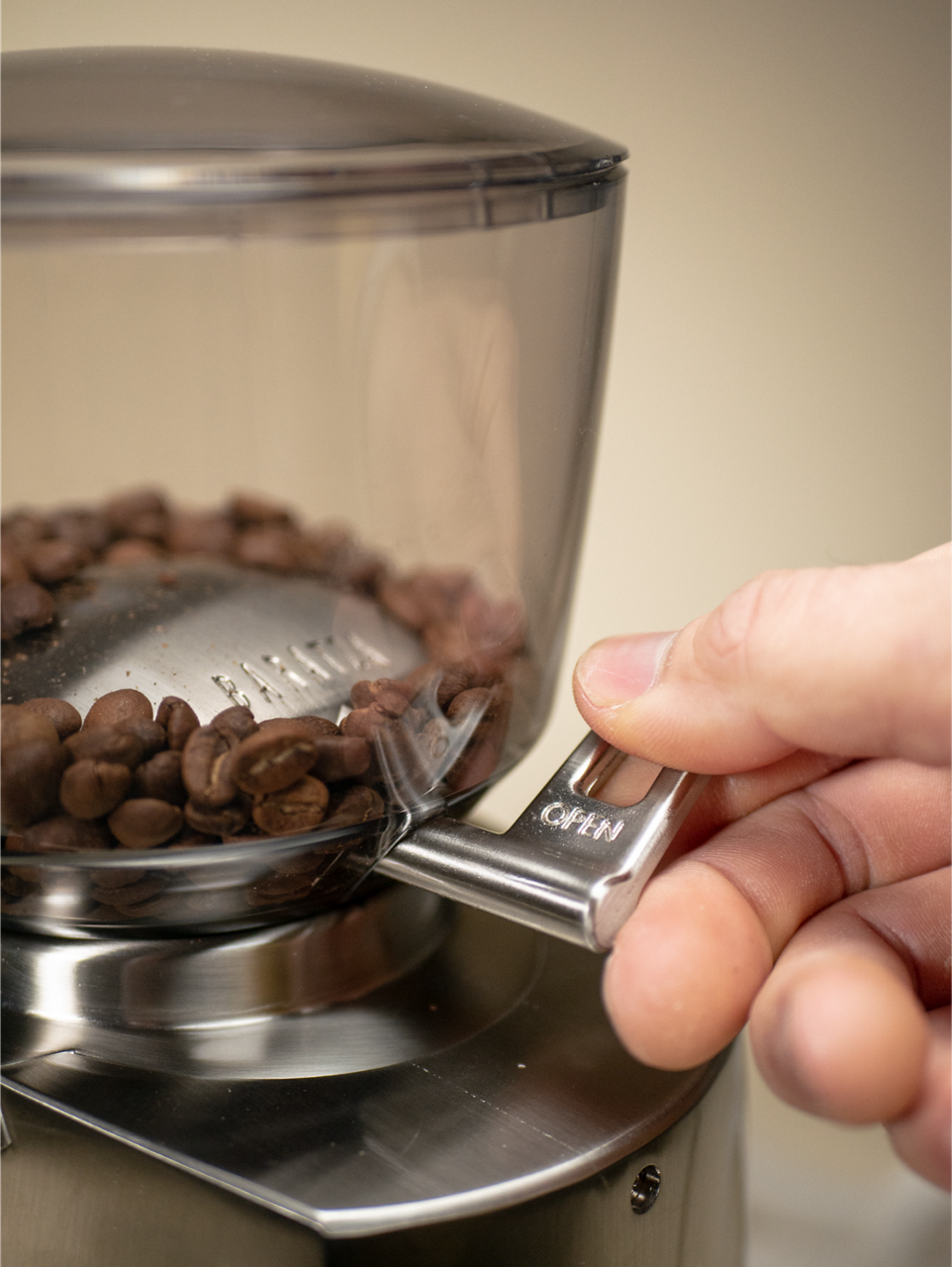
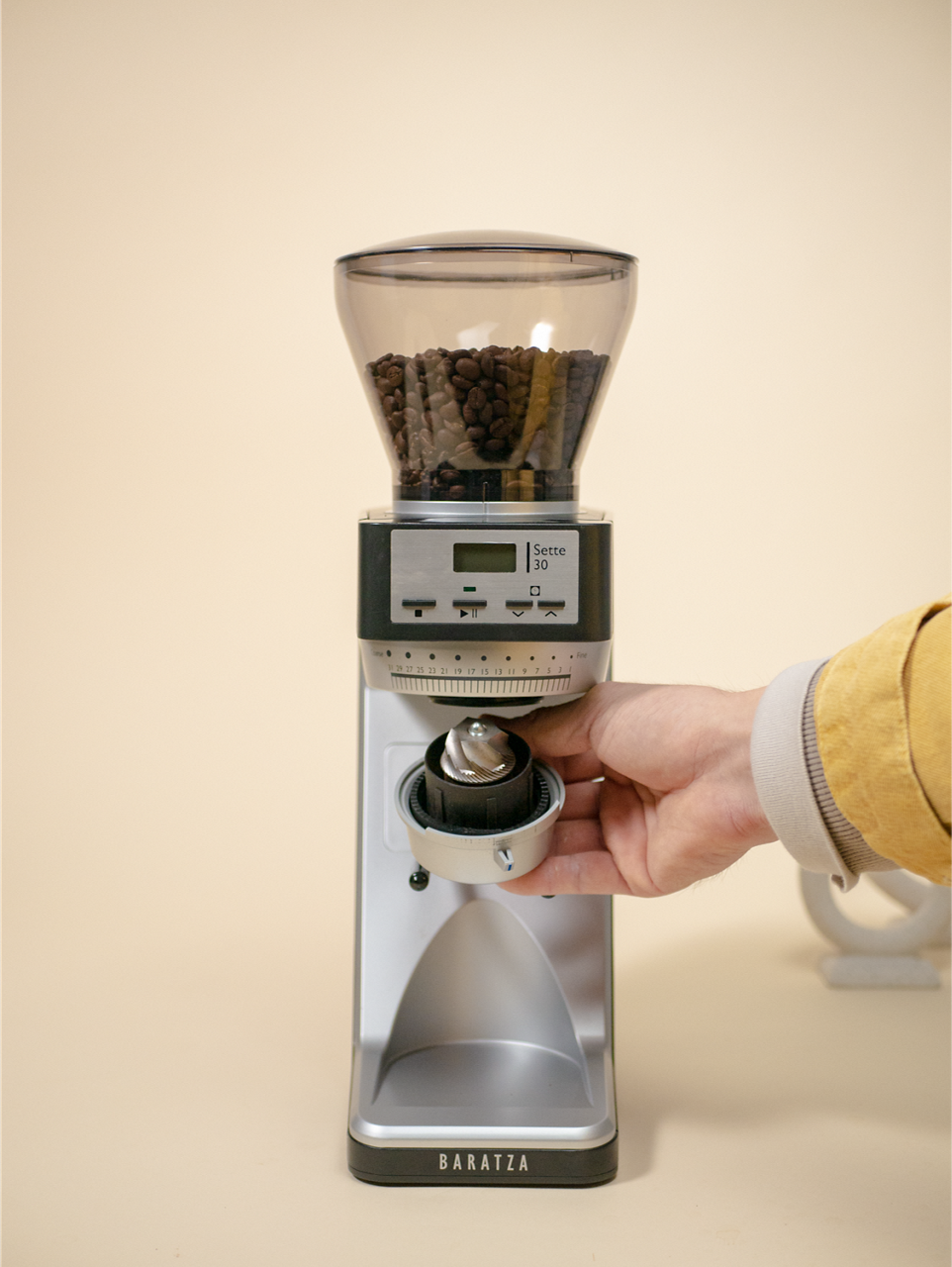
For those who use a Baratza grinder, the quiet hero in all of this is grind consistency. Cold coffee may seem relaxed, but it still rewards care.
The big takeaway is simple: iced coffee and cold brew are not two sides of the same coin. They are different tools for very different cups. One brings sparkle and one brings smoothness.
We Grind. You Brew.
[1] [3] Liang, J., Batali, M.E., Routt, C. et al. Sensory analysis of the flavor profile of full immersion hot, room temperature, and cold brewed coffee over time. Sci Rep 14, 19298 (2024). https://doi.org/10.1038/s41598-024-69867-6
[2] https://sca.coffee/sca-news/25/issue-19/cold-vs-iced-using-sensory-analysis-to-test-the-claim-that-cold-brew-is-sweeter-and-less-acidic
[4] https://www.youtube.com/watch?v=zSDaS0Wby0Q
 Coffee Education
 Coffee Education
 Coffee Education
 Coffee Education
 Coffee Education
 Coffee Education