Why the AeroPress Works So Well
The AeroPress blends immersion brewing with gentle pressure. Immersion extracts sweetness and body, while the pressure created during the plunge introduces clarity and shortens total brew time. This hybrid approach gives you control without complexity.
Its paper filter removes sediment and reduces bitterness, revealing subtle flavors. The compact brew chamber keeps heat stable, and the shorter extraction preserves delicate aromatics. Fruity coffees tend to shine with vibrancy, while chocolatey or nut‑forward coffees feel round and comforting.
Another advantage is its forgiving nature. Slight inconsistencies in pouring or temperature won’t ruin a brew. This makes the AeroPress ideal for exploration and learning. Every coffee reacts a little differently, and the method invites experimentation.
Choosing the Right Grind Size
Your grinder influences AeroPress results more than any other variable. A medium‑fine grind is the best starting point. Too fine, and the coffee may taste heavy or bitter; too coarse, and the cup can taste thin or sour.
Dialing in requires paying attention to flavor:
If the brew tastes sharp or overly bright, adjust slightly finer.
If it tastes flat or papery, adjust coarser.
Baratza grinders provide the consistency needed for clarity. When particles are even, extraction becomes more predictable, making it easier to identify sweetness, acidity, and the unique character of each coffee. Your grinder helps shape the balance the AeroPress is known for.
A Reliable Starting Recipe
While hundreds of AeroPress recipes circulate in the coffee world, most share a common structure. This balanced recipe offers a dependable starting point that you can refine as you learn your preferences.
Starting Grind Settings:
| Encore |
Encore ESP |
Encore ESP Pro |
Virtuoso+ |
Sette 30 |
Sette 270 |
Sette 270Wi |
Vario+ |
Vario W+ |
Forté AP |
Forté BG |
| 12 |
22 |
44 |
12 |
14 |
13E |
13E |
4M |
3M |
4M |
3M |
Coffee: 18 g
Water: 270 g at 200°F
Total Brew Time: ~2 minutes
- Heat water to about 200°F (93°C).
- Grind!
- Rinse the paper filter and set up your AeroPress.
- Add the coffee and gently shake to level.
- Start your timer and pour water slowly and evenly until you reach 270 g.
- Stir gently to ensure complete saturation.
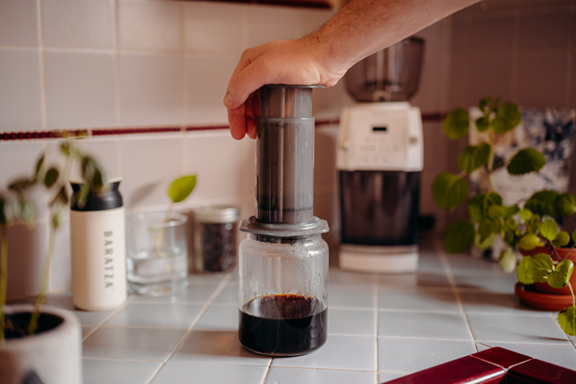
- Insert the plunger and pull up slightly to create a vacuum and stop dripping.
- At 1:30, begin plunging slowly.
- Stop when you hear a gentle hiss.
- Swirl your cup and enjoy.
This produces a sweet, clean cup with balanced acidity and a soft body. As you experiment, adjust just one variable at a time to understand its influence.
Variations That Change Expression
Small adjustments allow you to tailor your coffee’s flavor:
- Lower water temperature to accentuate chocolate and nut flavors.
- Raise temperature to highlight brightness in fruity coffees.
- A finer grind increases body and intensity.
- A coarser grind softens texture and emphasizes ease of drinking.
- More stirring boosts extraction; less stirring encourages clarity.
- The inverted method extends contact time, producing a richer cup.
Use these ideas as starting points. The goal is not perfection, but learning what you enjoy most.
How Your Grinder Supports Consistency
A consistent grinder helps the AeroPress shine. Even small inconsistencies in particle size can influence clarity, sweetness, and extraction speed. Stable, repeatable grind settings allow you to confidently adjust your recipe and understand how each change affects flavor.
If your cup tastes muddy or too intense, your grind may be fine. If it feels weak or unfinished, it may be coarse. Work in small steps. Over time, you’ll develop intuition for how grind size affects flavor across different coffees.
Maintaining your grinder also supports better brewing. Cleaning every few weeks helps keep flavors pure, especially in shorter brew methods where clarity matters.
Troubleshooting Common Issues
If your brew tastes sour:
- Use a slightly finer grind.
- Increase water temperature.
- Stir a bit more to improve extraction.
If your brew tastes bitter or heavy:
- Adjust slightly coarser.
- Lower your water temperature.
- Shorten steep time.
If plunging feels difficult:
- Your grind may be too fine.
- Stir more gently.
- Try a slightly coarser setting.
If your brew drains too quickly:
- Increase steep time or grind a little finer.
These adjustments help you shape your favorite cup with consistency.
Bringing It All Together
The AeroPress invites exploration. It’s approachable, flexible, and capable of producing excellent coffee across a wide range of roast levels and flavor profiles. With a trusted grinder, thoughtful technique, and curiosity, you’ll quickly learn how each adjustment shapes what you taste.
Most importantly, enjoy the process. Brewing is personal, and the AeroPress offers a simple, joyful way to connect with your coffee every day.
We grind. You brew.
 Brew Guides
 Brew Guides